Scaling Impact: Insights from the 6th Annual Social Entrepreneurship Symposium

The 6th Annual Social Entrepreneurship Symposium, hosted by Capital Solutions in collaboration with the SEF Social Entrepreneurship Association Uganda, took place on 8th, October 2026 at the Social Entrepreneurship Hub in Kajjansi. Held under the theme “Reimagining Impact: Scaling Social Enterprises for Inclusive Growth,” the hybrid event featured both physical and online attendance slots. It brought together stakeholders, changemakers, social entrepreneurs, academicians and policymakers around one central priority: driving sustainable scaling for social enterprises.
Discussions centred on how social enterprises can move beyond small, grant-funded projects to become financially sound businesses that deliver lasting impact for the communities they serve. Industry leaders agreed that development funding is changing, and that social enterprises must shift from donor-dependent models to structures that can sustain themselves.
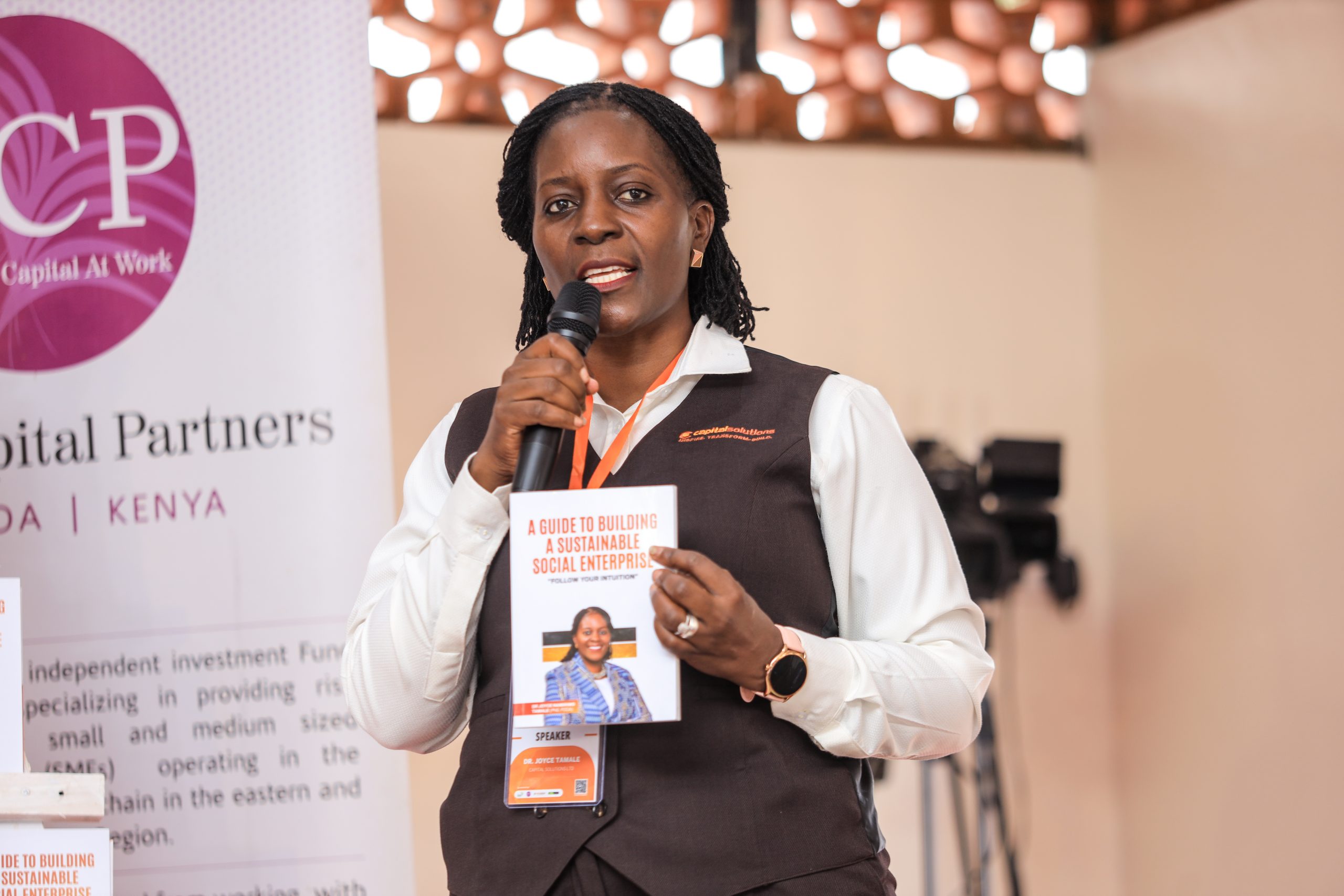
Dr. Joyce Tamale, CEO & Co-Founder Capital Solutions Ltd and Chairperson of the SEF Social Entrepreneurship Association Uganda in her opening remarks, stated that the theme, Reimagining Impact, calls for a fundamental shift in perspective. She urged the sector to look beyond simple beneficiary counts and work toward permanent, systemic change within communities.
Delivering the keynote address, Dr. Ian Clarke, owner and Executive Chairman of the Clarke Group as well as founder of the International Medical Group, reflected on his professional journey in Uganda and made a compelling case for resilience and patience in building sustainable ventures. He described his evolution from public health specialist to generalist: to build his businesses in healthcare, education and agriculture, he had to master unfamiliar fields, from medical equipment to accountancy and management.
Dr. Clarke stressed the importance of training entrepreneurs, particularly in turning business ideas into action and navigating the many challenges that follow. Drawing on the concept of seed capital and the success of Silicon Valley venture capitalists, he noted that the best investors do more than provide funding. They help entrepreneurs run their businesses and guide the transition to professional management.
Representing the commissioner Ministry of Trade, Industry, and Cooperatives, Mr. Johnson Abitekaniza, Assistant Commissioner MSME, underscored during his address that long-term social impact cannot exist without commercial sustainability and strict professional standards. He noted that while many enterprises fail due to missing objective data, poor record-keeping, and non-compliance with product quality standards which keeps local goods off supermarket shelves despite the Buy Uganda, Build Uganda (BUBU) framework the government is stepping in with targeted solutions.
Through initiatives like the Parish Development Model, the Ministry is encouraging entrepreneurs to move away from isolated operations and into organized collective structures that can easily access non-traditional financing and grants. Furthermore, the government is working to professionalize the image of micro-enterprises and open doors to broader regional trade through the EAC and AfCFTA. Ultimately, these steps aim to prepare Ugandan social enterprises to meet the stringent demands of international markets and angel investors.
Delivering closing remarks on behalf of the Permanent Secretary, Ministry of Gender, Labour and Social Development, Mr. Mujuni Bernard, Esq., Commissioner for Equity and Rights, acknowledged the key role social enterprises play in job creation, women and youth empowerment, and community development. He highlighted ongoing obstacles including restricted access to finance, markets, skills, technology, and supportive regulatory frameworks and urged stronger stakeholder collaboration to enable scaling. He advised entrepreneurs to reinforce their business frameworks and impact tracking, while prompting ecosystem partners to offer responsive backing that connects inclusion goals with long-term enterprise growth.
The plenary session argued that scale is earned through quality, discipline and collaboration, not through outreach numbers alone.
- Musa Bukenya, Executive Director of VACNET Social Enterprise, said the true measure of a social enterprise is not the volume of its outreach, but the longevity and quality of the transformation it achieves in people’s lives.
- Dennis Mugalu, representing Pearl Capital Partners, noted that scaling requires more than a social mission, demanding robust internal governance, financial discipline, and clearly defined operational systems, which are the foundations for attracting institutional capital.
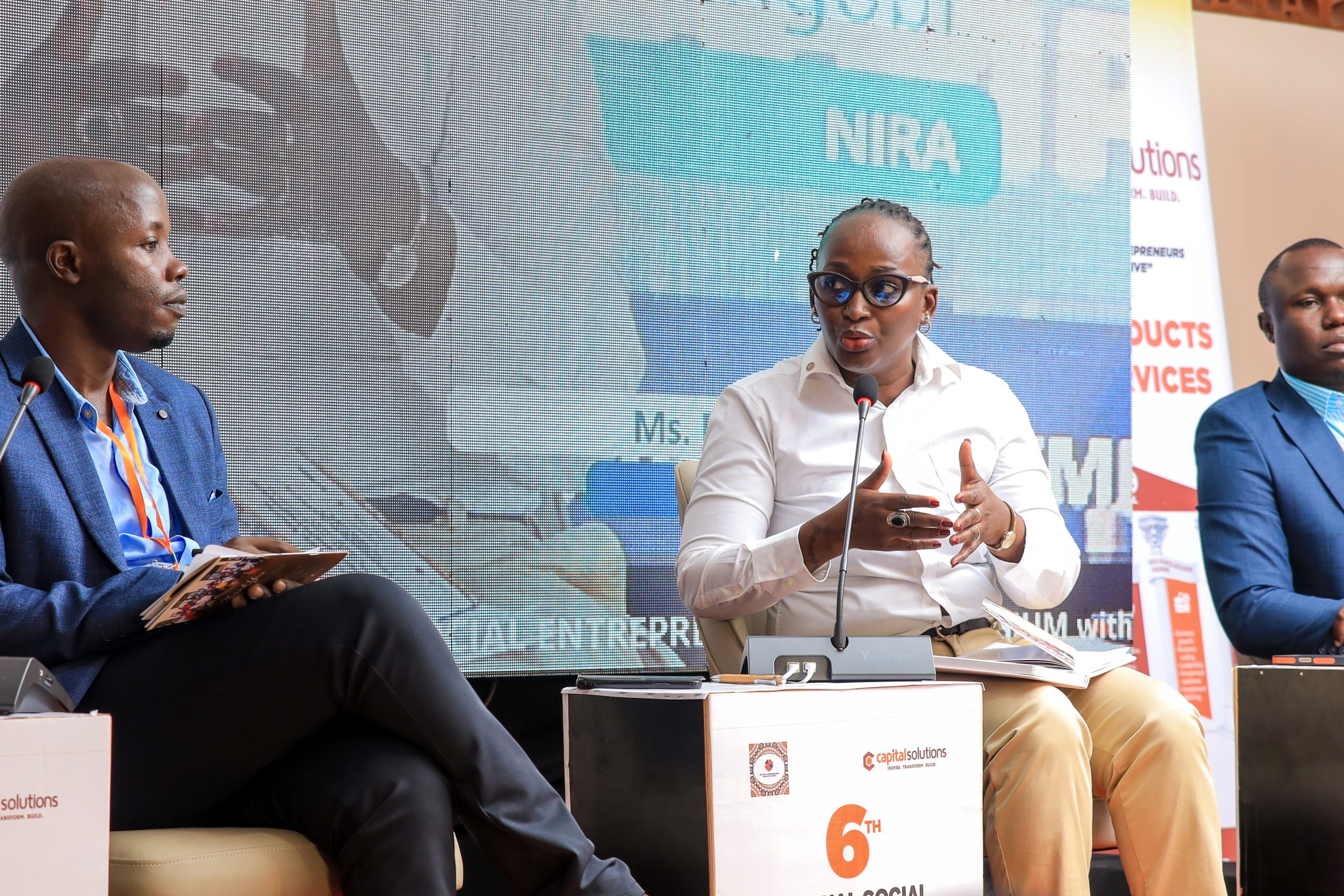
- Provia Nangobi, representing the National Identification and Registration Authority(NIRA), stressed that sustainable impact cannot be achieved in isolation, calling for deeper integration between social entrepreneurs, the public sector, and private industry to build an environment that supports long-term growth.
The symposium also marked the launch of the Co-Working Space, which will give SEF members a place to work and access to mentorship. The launch reflects Capital Solutions’ continued investment in infrastructure that supports enterprise growth and collaboration.
Three breakout sessions took the conversation deeper, offering participants practical guidance on the questions that determine whether a social enterprise can grow:
- Unlocking Impact Capital: Financing the Future of Social Enterprises examined how social enterprises can access the right kind of funding. Moderated by Mr. Elvis Kadama, with speakers Ms. Jacqueline Kasiiku (Senior MSME Finance & Entrepreneurship Consultant), Ms. Gladys Nalukenge (KCB), and Ms. Carol Nyangoma (Executive Director, Warm Hearts Foundation), participants left with a clearer view of the financing options open to them and what investors look for.
- Inclusive Social Entrepreneurship: Empowering Women and Youth for Lasting Impact explored how enterprises can create real opportunities for women and young people. Moderated by Ms. Nassali Mary, with speakers Prof. Muhammad Ngoma (KIU), Ms. Georgia Tumwesigye (Programme Lead, Movit Foundation), and Mr. Micheal Nyitegeka (Director, Refactory), attendees took away ideas for building inclusion into how an enterprise is designed and run.
- Sustainable Growth Through Strong Governance: Scaling Social Enterprises for Climate and Social Impact covered governance, ESG and the triple bottom line, the 8 Cs of an effective board, mission-aligned capital, and founder-board and family succession. Moderated by Mr. Steven Tumwesigye, with speakers Ms. Maria Kizza (SWEDO), Mr. Alfred Agaba (Governance expert), and Immaculate Nampijja (CARE International in Uganda, Private Sector & Innovation Advisor), attendees left with practical tools for strengthening their boards and planning for leadership transitions.
Together, the sessions gave entrepreneurs, funders and policy makers a shared set of next steps: secure suitable capital, build inclusion into the model, and put governance in place before scaling. The consensus was clear: inclusive growth comes from aligning a purposeful social mission with a disciplined, scalable business model.
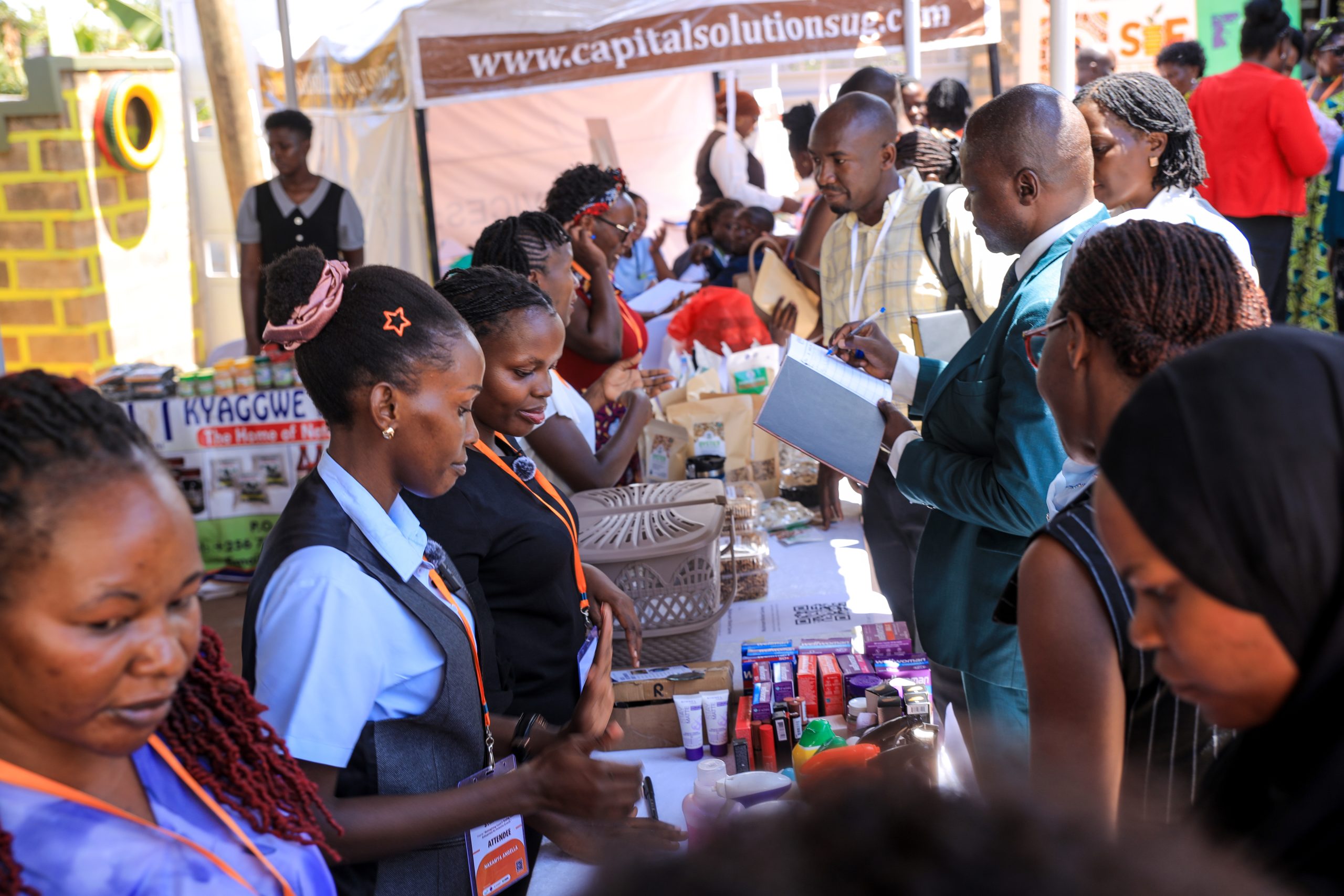
Adding energy and hands-on discovery to the day, a vibrant exhibition showcased 30 dynamic social enterprises and organizations, giving attendees the opportunity to engage directly with innovative solutions and explore powerful new partnerships. The bustling showcase featured inspiring ventures such as Bio Frame, Mama Mucyara Enterprises, Trillion Looks Store, Lucky Girl Pads, Best of West, SWEDO, Classic Organics among others, each demonstrating firsthand how creative entrepreneurship is actively reshaping communities and driving sustainable impact.
We also thank our official partners, whose support and commitment to this agenda made the day possible:
The Segal Family · KCB Bank Uganda · Pearl Capital Partners
Our sincere appreciation goes to the Capital Solutions team and the organising committee, whose dedication and hard work brought the symposium together. We also thank the speakers, exhibitors, SEF members and all participants who contributed to a productive and inspiring day.